GPTApps
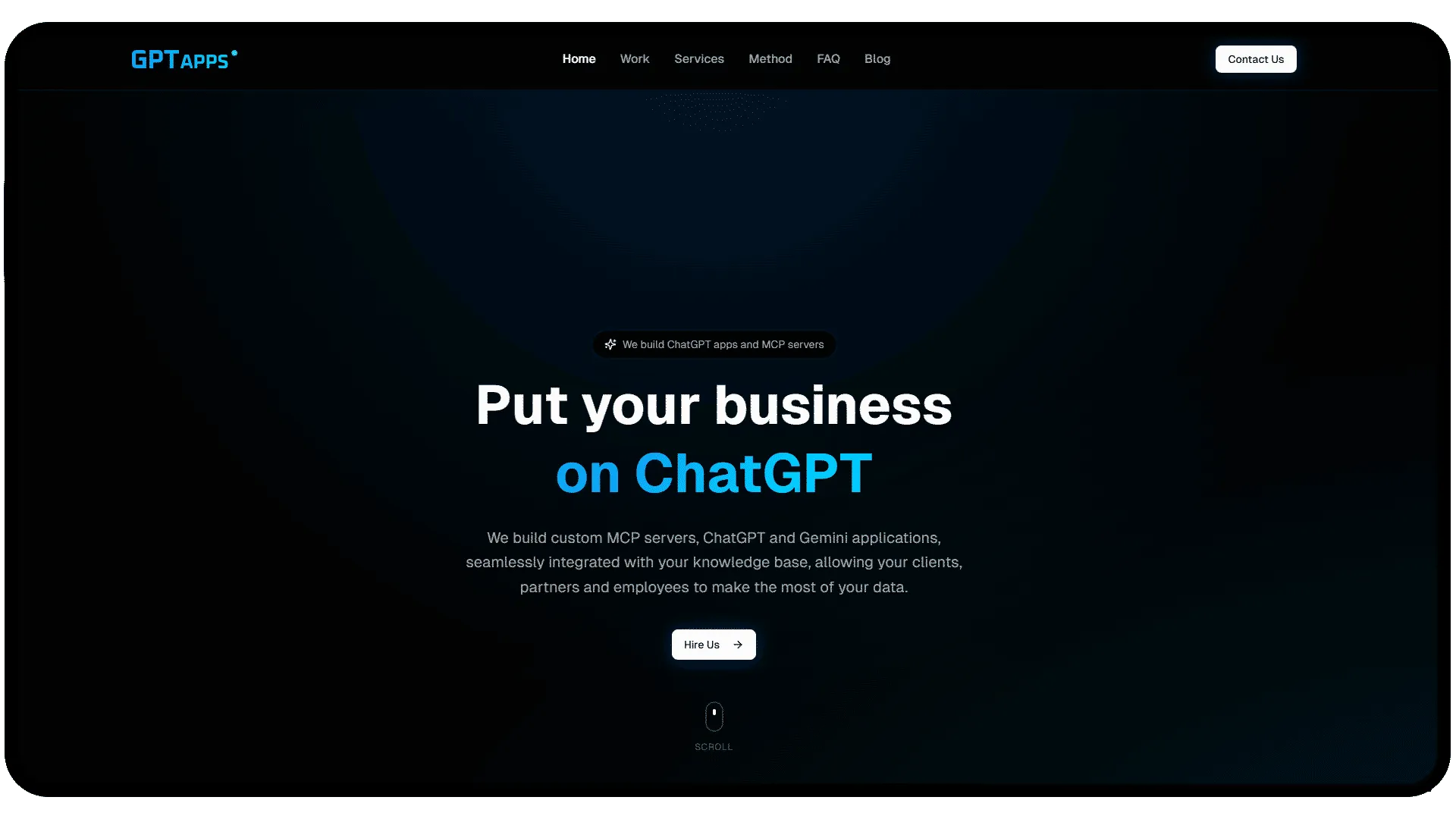
GPTApps is the dedicated AI-native development brand by MarsBased. Born from a decade of excellence in web and mobile development, GPTApps was created to meet the soaring demand for specialized AI solutions, from custom ChatGPT and Gemini applications to high-performance MCP servers.
GPTApps: The AI brand by MarsBased
GPTApps is the specialized AI division of MarsBased. It was born from our necessity to stay at the forefront of the generative AI revolution. We help businesses integrate LLMs and AI tools into their operations, but we have a golden rule: we never recommend a tool we haven't "dogfooded" ourselves.
By acting as our own testbed, we ensure that our AI-driven solutions are not just hype, but practical, high-performance tools for real-world production environments.
Tech stack
The technologies we used in this project
Next.js
The React framework for building high-performance, SEO-friendly production websites.
Vercel v0
A generative AI tool that turns natural language prompts into functional UI components instantly.
Tailwind CSS
A utility-first CSS framework for rapid styling and easy customization of AI-generated code.
shadcn/ui
A professional component library used as the design foundation for accessible and modern interfaces.
React
The core library used to ensure the final codebase is modular, scalable, and maintainable.
Vercel
The hosting platform that manages the automated deployment pipeline from the v0 canvas to a live URL.
The challenge
In the fast-paced startup ecosystem, speed-to-market is the ultimate currency. Traditionally, building a bespoke, high-quality marketing website involves a lengthy cycle of design in Figma followed by manual frontend development, a process that can take weeks.
The GPTApps team set out to challenge this status quo using Vercel's v0. The mission was to answer three critical questions:
Production readiness: Could an AI-generated site actually handle the requirements of a real company?
Workflow friction: Does the integration with professional tools like GitHub and Vercel work seamlessly, or does it add overhead?
The "clean code" tax: Does the speed of AI generation result in a codebase that is too messy to maintain long-term?
The solution
We moved away from traditional static wireframing to an AI-first development workflow, positioning v0 as a high-speed pair programmer. The process was divided into three strategic phases:
Prompt-driven scaffolding: Instead of manual coding, we used natural language to describe layouts, sections, and functional requirements. v0 instantly generated high-fidelity React components using shadcn/ui, allowing us to visualize the final product in real-time rather than in Figma.
Iterative design & refinement: Using the built-in "Design Mode," we defined brand-specific variables for typography and colors. Our developers then used the integrated code editor to fine-tune Tailwind CSS classes, ensuring the output felt like a custom-built site rather than a generic template.
Professional DevOps integration: To ensure the code was production-grade, we synced the v0 workspace directly with GitHub. This allowed us to work on separate branches, perform manual code reviews to clean up AI inconsistencies, and leverage Vercel's CI/CD pipeline for instant, one-click deployments.
Key wins
Unprecedented speed
We delivered a functional landing page in 30 minutes and a polished corporate site in under 48 hours.
Seamless integration
The end-to-end connection between v0 and GitHub enabled a smooth and professional version-control workflow.
Efficiency gains
We reduced initial implementation time by 45%, allowing our team to focus on high-level architecture.
Verified methodology
We established a new internal standard for rapid prototyping and high-speed MVP delivery for our clients.
Let's work together
We work with a select number of clients each year. Let's see if there's a fit.
Schedule a call