Dewocracy
DeWocracy is a visual SaaS platform designed for hybrid workspace management and desk booking. It launched with a rapid MVP to validate the market using an interactive SVG maps web interface for managers and a mobile app for employees. Its strategic goal was to provide quick validation of the business model before massive investment.
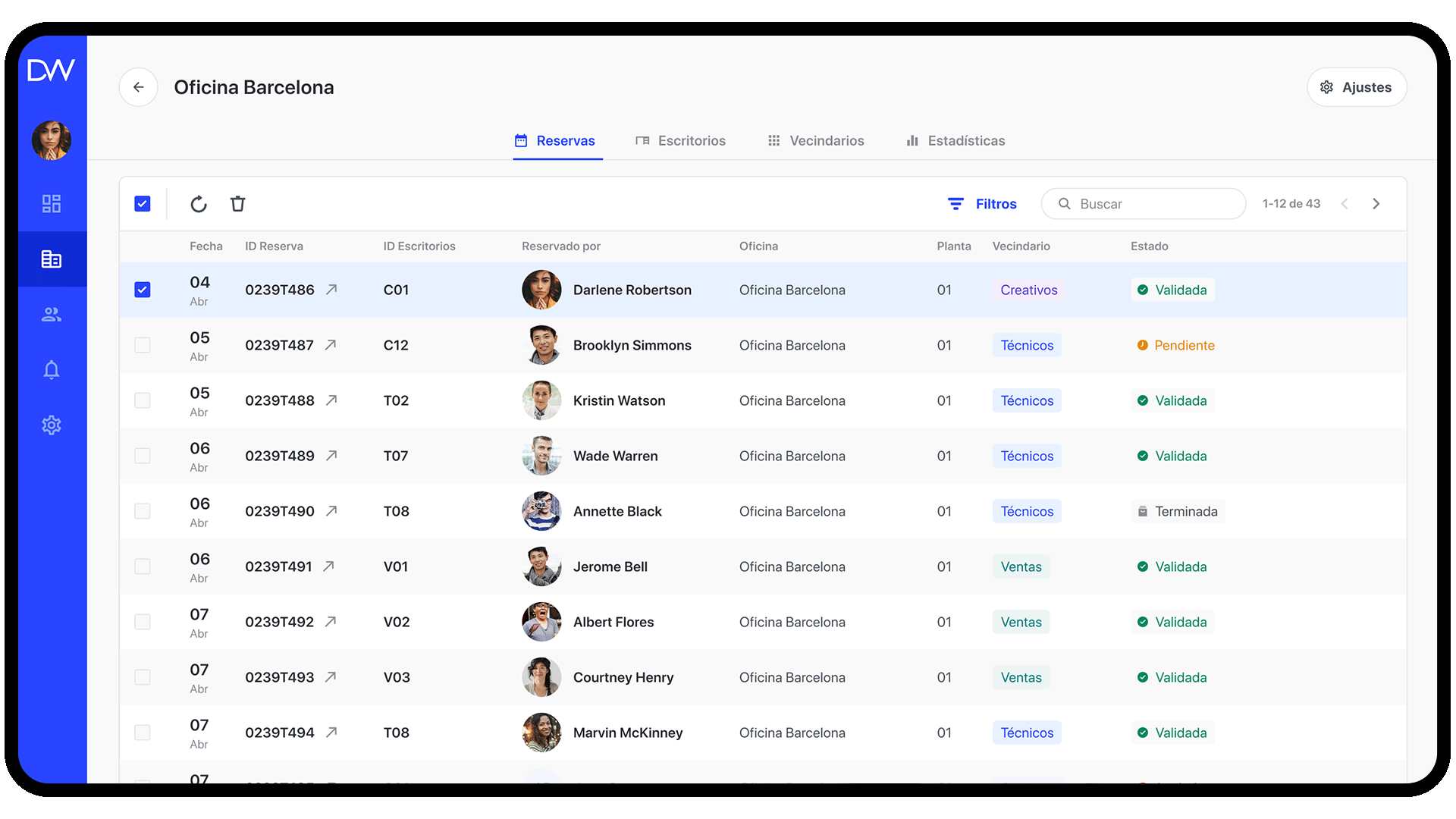
DeWocracy emerged with the ambition of offering a smarter, more intuitive way to manage workspace occupancy in an increasingly hybrid work environment. The platform allowed companies to organize offices, floors, and desks through a visual interface designed to feel as natural as interacting with a real office layout.
On the web platform, office managers could create and configure entire floors, visualize interactive SVG maps with identifiable desks, monitor occupancy, and follow bookings in real time. The interface was built so that managing a space felt as straightforward as looking at an architectural plan, enhanced by the ability to interact with each element and update it instantly.
Employees used a dedicated mobile app that enabled them to declare whether they would be working remotely, from a coworking space, or from the office on any given day. They could book desks, see which colleagues were attending, and manage their reservations effortlessly. Together, both interfaces formed a cohesive system for understanding and coordinating workspace usage with clarity and flexibility.
The development of the MVP allowed DeWocracy to move quickly toward its primary goal: validating whether the market was genuinely interested in a platform for managing hybrid workspaces and desk reservations. Within just two to three months, the startup had a fully functional product ready to present to potential customers, gather feedback, and evaluate commercial traction.
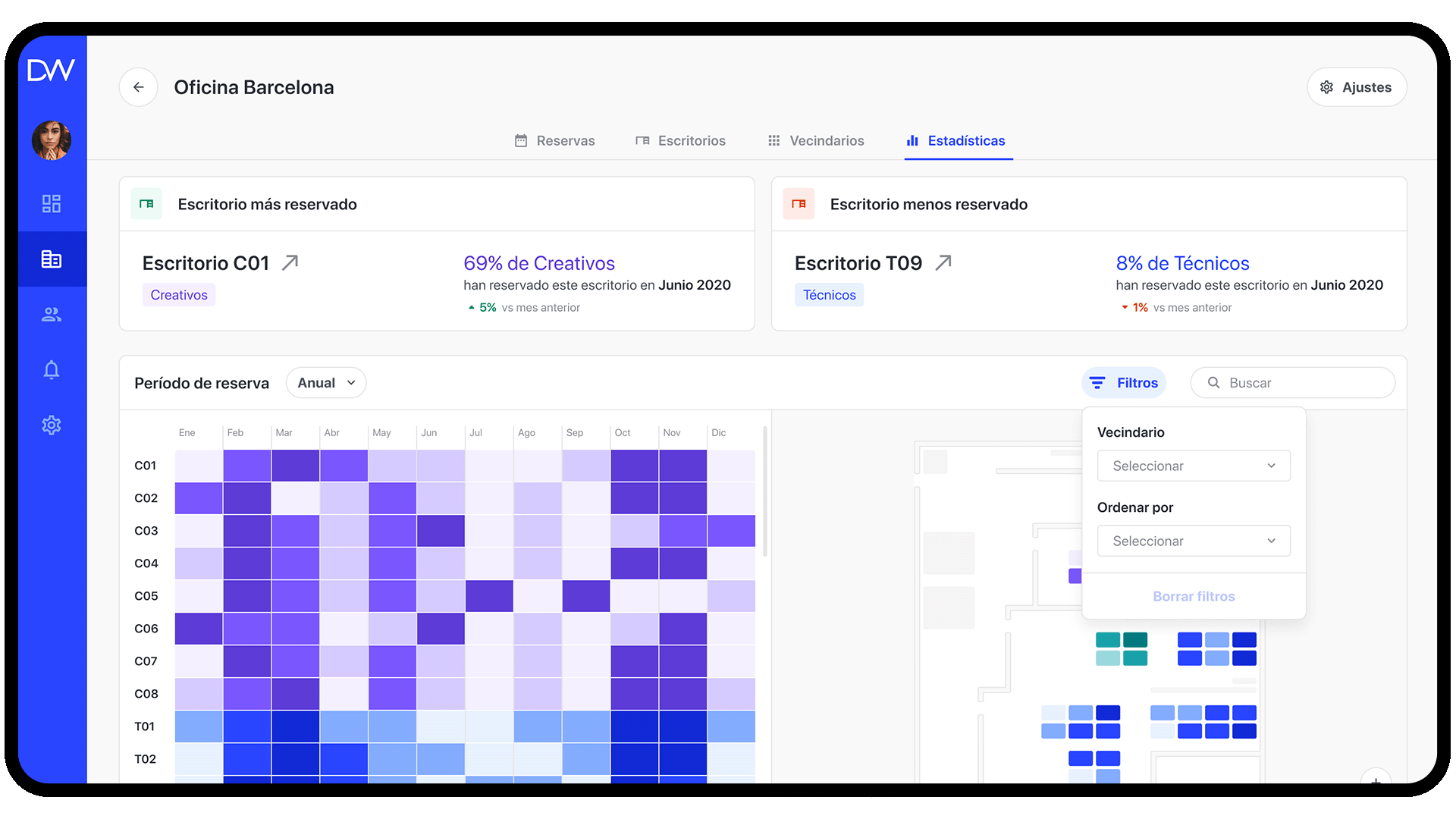
Although the project ultimately did not secure the level of market interest needed to continue raising funds, the MVP played a decisive strategic role. It gave the founders clarity about the viability of their business model and helped them avoid substantial investment in a direction that would not scale sustainably. The product became a powerful learning tool, enabling the team to pivot toward new ideas with confidence, backed by both technical validation and real-world insight.
One of the most technically demanding aspects of the project was the implementation of the interactive SVG maps. The platform needed to display entire office floors, complete with desks, identifiers, states, and dynamic interactions, with high visual fidelity and smooth performance. Integrating these maps into the web application required careful coordination between the development team and the design studio to ensure accuracy, usability, and responsiveness.
Another significant challenge came from working with a backend developed externally by the client. As the project evolved, it was essential to align data models, endpoints, and reservation flows so that both the web interface and the mobile app behaved consistently. Designing two distinct user experiences, one for managers, who needed advanced administrative tools, and another for employees, who needed a streamlined and simple workflow, required a deep understanding of each role and its practical needs.
Quick Wins
Interactive Maps
Highly intuitive SVG-based floor maps that allowed managers to visualize desks and availability at a glance.
MVP Delivery in 10 Weeks
A rapid and efficient development cycle that enabled early market validation without compromising core features.
Dual Experience
Two tailored interfaces optimized for the specific needs of managers and employees.
Scalable Architecture
A clean and extensible technical foundation prepared for future enhancements.